Anchor-epigyne Artoria Artoria ancorata Prado, Baptista & Framenau, 2026
Fauna Portal species: 12464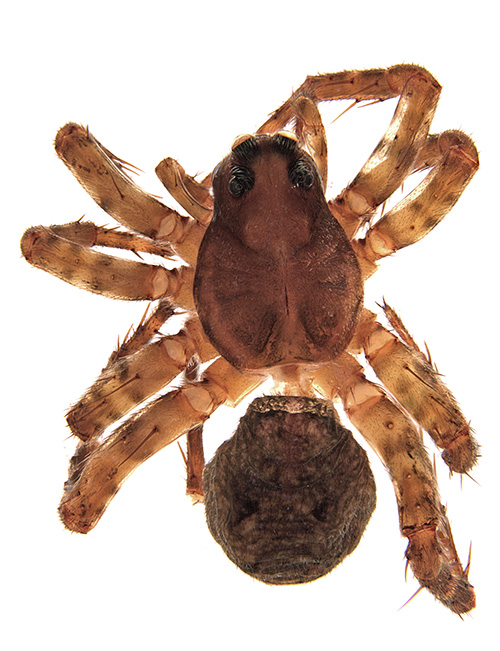
Artoria ancorata female, dorsal habitus (AM KS.131838; Myall Lakes National Park, New South Wales)
Image: Prado, Baptista & Framenau (2026; fig. 2A)
Filename
A_ancorata_female_KS131838_habitus_dorsal.jpg
File Metadata
Title
Set element specific value (No default)
Description (Caption)
<p><i data-start-index="147">Artoria ancorata</i> female, dorsal habitus (AM KS.131838; Myall Lakes National Park, New South Wales)</p>
<p>Image: Prado, Baptista & Framenau (2026; fig. 2A)</p>
Rich Text Editor, data_sys_file_reference__14625__description_Editor toolbarsBasic Styles Bold Keyboard shortcut Ctrl+B Italic Keyboard shortcut Ctrl+IClipboard/Undo Cut Keyboard shortcut Ctrl+X Copy Keyboard shortcut Ctrl+C Paste Keyboard shortcut Ctrl+V Paste as plain text Keyboard shortcut Ctrl+Shift+V Paste from Word Undo Keyboard shortcut Ctrl+Z Redo Keyboard shortcut Ctrl+YInsert Insert FontAwesome iconPress ALT 0 for help◢Elements path
File
A_ancorata_female_KS131838_habitus_dorsal.jpg
File
A_ancorata_female_KS131838_habitus_dorsal.jpg
[14266]
Hide
Language
English[All]
Diagnosis
Artoria ancorata belongs to the lineata-group, due to its epigyne having an inverted T-shaped median septum and coiled spermathecal stalks attached ectally. Among the species within this group, females of A. ancorata resemble those of A. pedroi most, as the epigynes of both species have the robust posterior portion of the lateral lobes totally fused with the elevated median septum, and the internal genitalia share globular spermathecae and spiralled spermathecal stalks. However, in A. ancorata the median septum merges with the anterior margin of the atrium, while in A. pedroi the median septum is clearly delimited and spaced from the anterior margin of the atrium. In addition, in the epigyne of A. ancorata the sclerotization on the posterior portion of the lateral lobes is lighter and gradually fades towards the middle, while in A. pedroi there are two well-marked, curved and heavily sclerotized patches in this region.
Linnean Holotype
Australia
- New South Wales
Fauna Portal Records
The map shows all records that have been verified as part of the Fauna Portal project and may not represent the true distribution of a species. Specifically, for described species, check the link to the Atlas of Living Australia on this page for potential wider distributions. Fauna Portal Reference specimens and Linnean types are shown in red. If you identified a specimen that exceeds the distribution of an undescribed species as illustrated here, please contact the Fauna Portal team who can assist with the lodgement of the specimen in a public institution and display on the map.
Publications
(2026): Taxonomic revision of the wolf spider genus Artoria (Araneae, Lycosidae, Artoriinae) from Northern Territory and Queensland, with additions to the fauna of New South Wales and the Australian Capital Territory. Megataxa. 19: 379 - 456DOI