Seed-head Mouse Spider Missulena dipsaca Faulder, 1995
Fauna Portal species: 7628Diagnosis
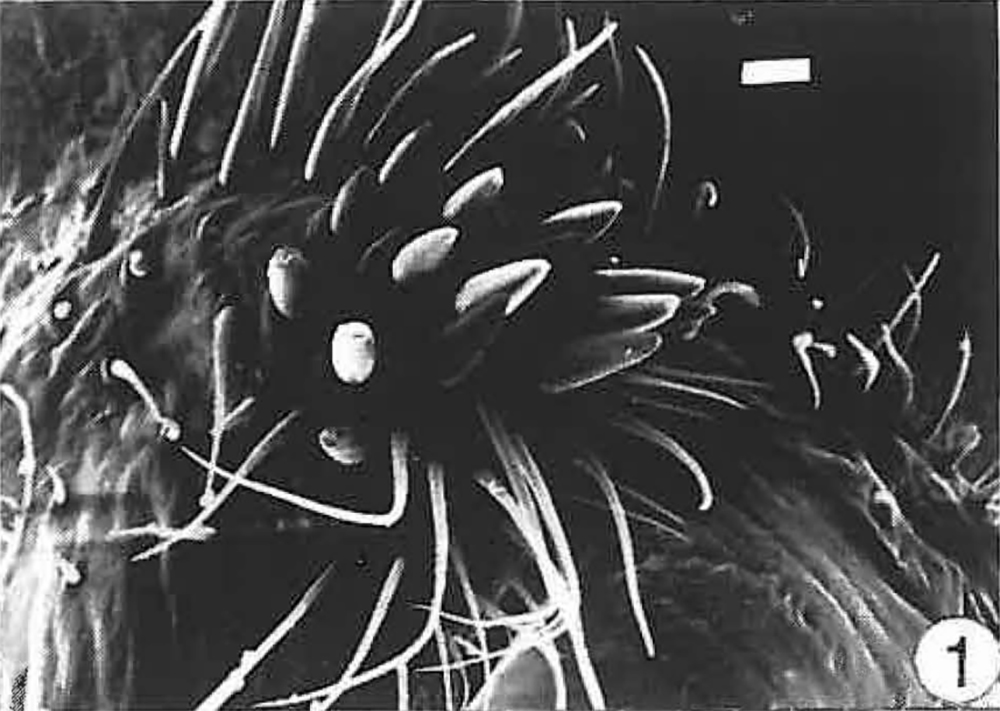
(after Faulder 1995): Missulena dipsaca is distinguished by the male rastellum having a number of narrow spines on distinct process, rather than few wide spines on distinct process (M. rutraspina), or number of narrow spines on at most low mound (all other species). Fangs with basomedial tooth (absent in M. rutraspina). Male caput and chelicerae black, rather than red (M. occatoria). Dorsal and lateral abdomen concolorous, rather than dorsum at least partly off-white (M. bradleyi). Tip of pedipalp embolus varies from arrowhead form to the duckbill form also found in M . occatoria and M. granulosa. Scapulae present on metatarsus IV, occasionally proximal half of tarsus IV also, present on metatasus and tarsus III in all other species. Rasps present on patellae III only, also present on patellae I in all other species. Female unknown.
Based on the distribution patterns of other Missulena species, it is likely that the Western Australian records of M. dipsaca represent a different, closely related species.
Status
- native
Linnean Holotype
Australia
- New South Wales
- Queensland
- Victoria
- Western Australia
Fauna Portal Records
The map shows all records that have been verified as part of the Fauna Portal project and may not represent the true distribution of a species. Specifically, for described species, check the link to the Atlas of Living Australia on this page for potential wider distributions. Fauna Portal Reference specimens and Linnean types are shown in red. If you identified a specimen that exceeds the distribution of an undescribed species as illustrated here, please contact the Fauna Portal team who can assist with the lodgement of the specimen in a public institution and display on the map.
Publications
Faulder R.J. (1995): Two new species of the Australian spider genus Missulena Walckenaer (Araneae: Actinopodidae). Records of the Western Australian Museum Supplement. 52: 73 - 78
Araneae (Spiders)
- Actinopodidae
- Missulena
- bradleyi
- davidi
- dipsaca
- durokoppin
- faulderi
- FP-11270 (WAM MYG993)
- FP-11337 (WAM MYG252)
- FP-12574
- FP-13977 (WAM MYG969)
- FP-13978 (WAM MYG931)
- FP-13979 (WAM MYG966)
- FP-13980 (WAM MYG967)
- FP-13981 (WAM MYG968)
- FP-13982 (WAM MYG964)
- FP-13984 (WAM MYG929)
- FP-13986 (WAM MYG940)
- FP-13987 (WAM MYG047)
- FP-13988 (WAM MYG973)
- FP-13989 (WAM MYG972)
- FP-13990 (WAM MYG932)
- FP-13991 (WAM MYG941)
- FP-13992 (WAM MYG928)
- FP-13993 (WAM MYG970)
- FP-13994 (WAM MYG926)
- FP-13995 (WAM MYG635)
- FP-13996 (WAM MYG048)
- FP-13997 (WAM MYG046)
- FP-13998 (WAM MYG995)
- FP-13999 (WAM MYG939)
- FP-14000 (WAM MYG049)
- FP-14002
- FP-14003
- FP-14004 (WAM MYG290)
- FP-14005 (WAM MYG043)
- FP-14006 (WAM MYG930)
- FP-14008 (WAM MYG226)
- FP-14010 (WAM MYG040)
- FP-14011 (WAM MYG994)
- FP-14012 (WAM MYG962)
- FP-14013 (WAM MYG289)
- FP-14647 (WAM MYG051)
- FP-14648 (WAM MYG844)
- FP-14649 (WAM MYG927)
- FP-14651 (WAM MYG933)
- FP-14652 (WAM MYG971)
- FP-14653
- FP-377 (BWI sp. 1)
- gelasinos
- granulosa
- harewoodi
- hoggi
- ignea
- iugum
- langlandsi
- leniae
- mainae
- manningensis
- melissae
- minima
- occatoria
- pinguipes
- pruinosa
- rutraspina
- terra
- torbayensis
- Missulena
- Anamidae
- Araneae fam. indet.
- Araneidae
- Archaeidae
- Argyronetidae
- Arkyidae
- Barychelidae
- Cheiracanthiidae
- Clubionidae
- Corinnidae
- Ctenidae
- Cycloctenidae
- Deinopidae
- Desidae
- Dictynidae
- Filistatidae
- Gnaphosidae
- Halonoproctidae
- Hersiliidae
- Idiopidae
- Lamponidae
- Linyphiidae
- Lycosidae
- Mimetidae
- Miturgidae
- Mysmenidae
- Nicodamidae
- Oecobiidae
- Oonopidae
- Oxyopidae
- Paraplectanoididae
- Philodromidae
- Pholcidae
- Phonognathidae
- Pisauridae
- Prodidomidae
- Salticidae
- Scytodidae
- Segestriidae
- Selenopidae
- Sparassidae
- Symphytognathidae
- Tetrablemmidae
- Tetragnathidae
- Theridiidae
- Thomisidae
- Toxopidae
- Trachelidae
- Trachycosmidae
- Trochanteriidae
- Uloboridae
- Zodariidae
- Zoropsidae
All classes
- Arachnida
- Crustacea
- Entognatha
- Gastropoda
- Insecta
- Blattodea s. str. (Cockroaches)
- Coleoptera (Beetles)
- Dermaptera (earwigs)
- Diptera (flies, mosquitos)
- Entomobryomorpha (slender springtails)
- Hemiptera - Auchenorrhyncha (cicadas, planthoppers)
- Hemiptera - Heteroptera (True Bugs)
- Hemiptera - Sternorrhyncha (aphids, scales etc.)
- Hymenoptera - Formicidae (Ants)
- Hymenoptera excl. Formicidae (bees and wasps)
- Mantodea (Praying Mantises)
- Orthoptera - Caelifera (Grasshoppers)
- Trichoptera (Caddisflies)
- Zygentoma (silverfish)
- Myriapoda
